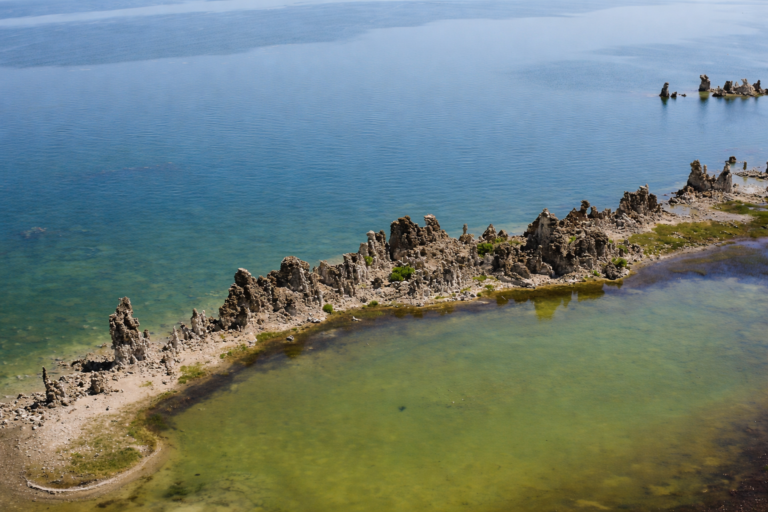
Tufa are calcium carbonate formations that grow underwater where mineral-rich freshwater mixes with alkaline lake water. As the minerals precipitate, they build hollow towers, arches, and spires over time. When lake levels drop, these structures are exposed, leaving behind surreal, skeletal landscapes like those at Mono Lake and the Trona Pinnacles.
Ep 02
Playas
Pleistocene Lakes
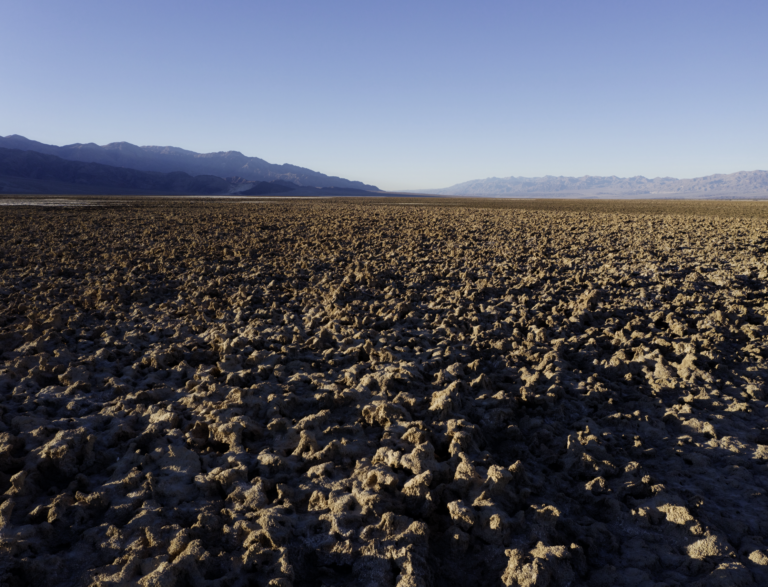
Playas are dry lake beds that fill briefly with water after rain, then evaporate under intense heat, leaving behind flat, cracked surfaces. Fine sediments settle into smooth, reflective basins, while salts and minerals create subtle textures and patterns. In places like Death Valley, these landscapes shift between water and emptiness, recording cycles of evaporation and exposure.
Ep 03
Sand Dunes
Mojave National Preserve
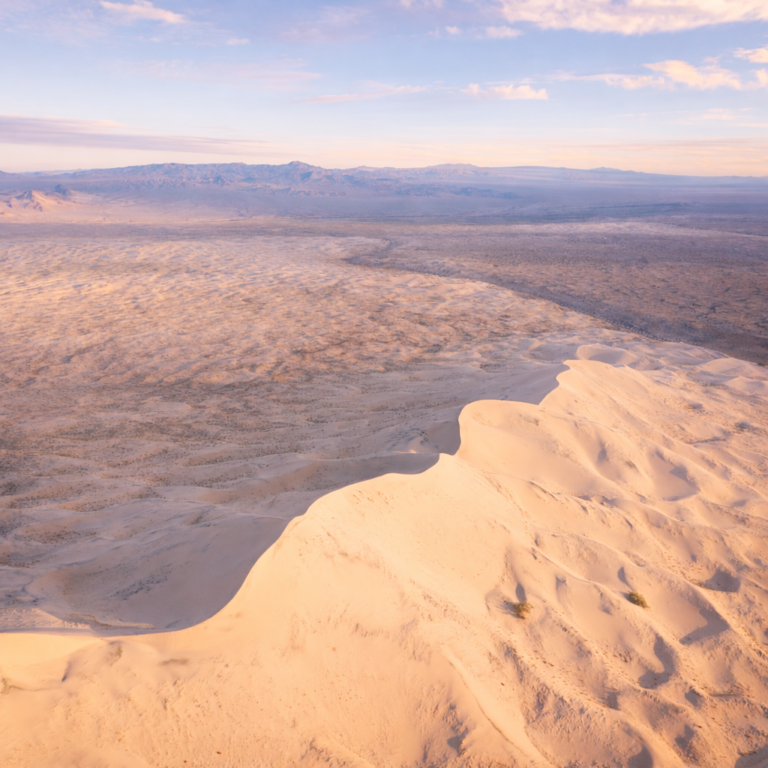
Sand dunes are formed by wind moving loose sand across open terrain, shaping it into ridges, waves, and steep slopes. As wind direction shifts, dunes migrate and constantly reshape, creating ripples, sharp crests, and smooth curves across the landscape.
Ep 04
Sand Stone
Valley of Fire
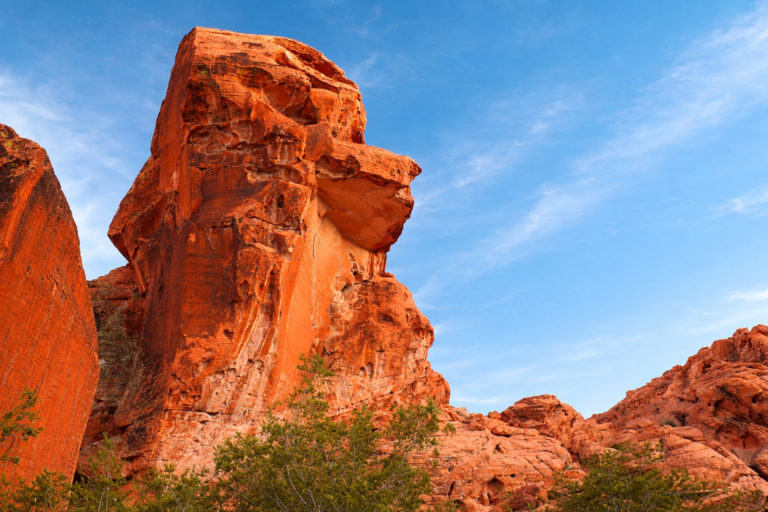
Sandstone forms from layers of compacted sand, shaped over time by wind and water into cliffs, arches, and intricate textures. Erosion cuts through these layers, revealing bands of color and structure that define many desert landscapes.
Ep 05
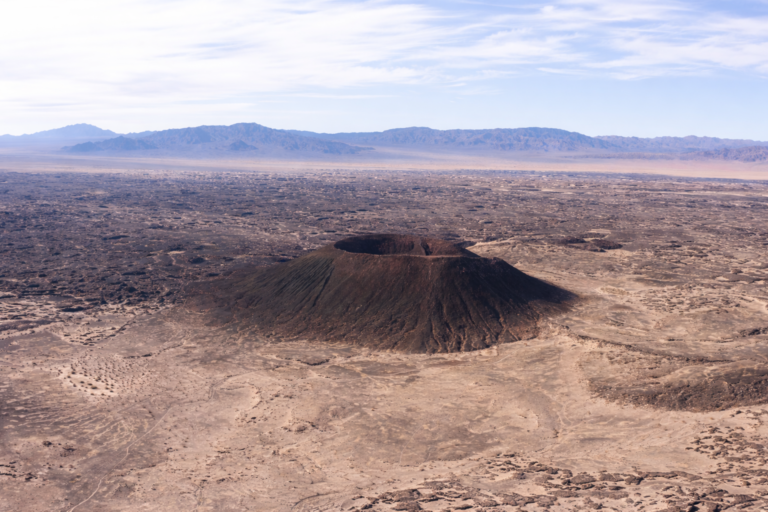
Cinder Cones
Cima Volcanic Field
Cinder cones are small volcanoes built from fragments of lava thrown into the air during eruptions. These materials fall back to the ground and accumulate into steep, symmetrical hills, leaving behind stark, dark formations across the desert.
Ep 06
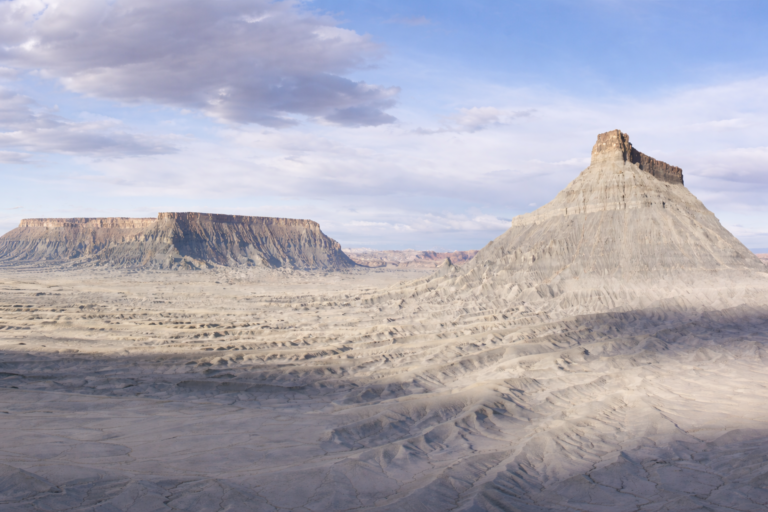
Terres Mauvaises
Factory Butte & Font’s Point
Badlands are heavily eroded terrains of soft rock carved into ridges, gullies, and sharp formations. Rapid weathering exposes layers of earth, creating complex textures and harsh, fragmented landscapes.
Ep 07
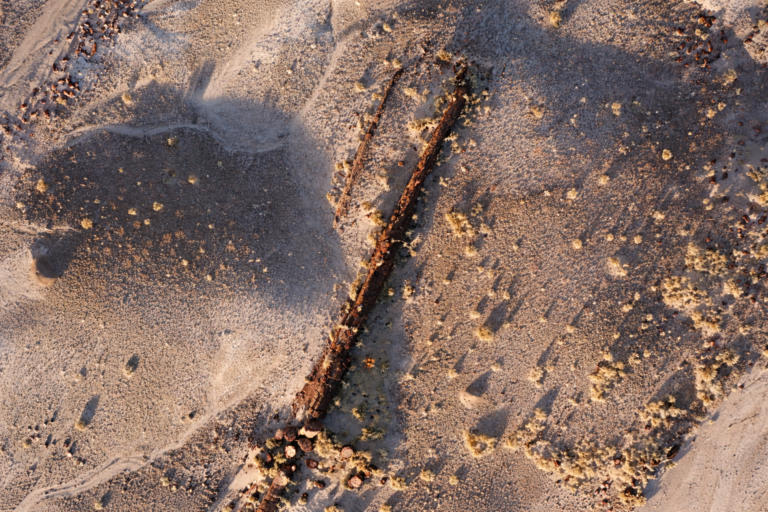
Fossil Forest
Petrified Forest NP
Fossil forests preserve ancient trees that have turned to stone over millions of years. Minerals gradually replace the organic material, maintaining the original structure while transforming it into solid rock.
Ep 08
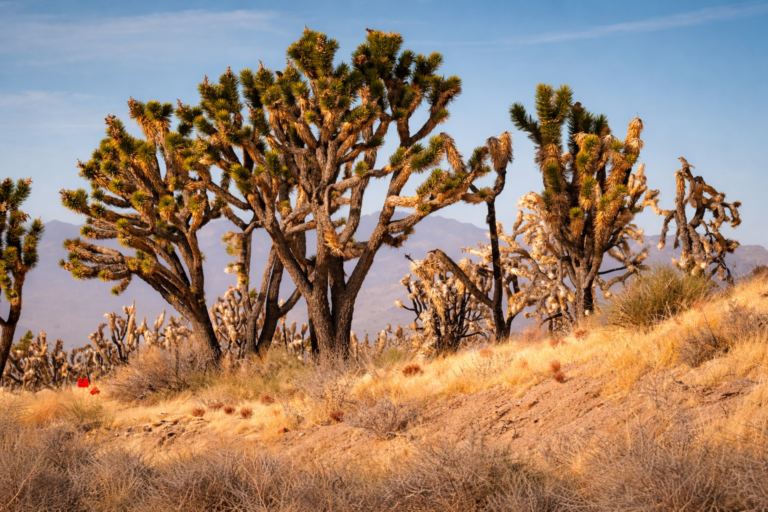
Yucca brevifolia
Mojave National Preserve
Yucca brevifolia, known as the Joshua Tree, is a defining plant of the desert. Its branching structure and rigid leaves are adapted to extreme dryness, giving the landscape a distinct and recognizable form.
Ep 09
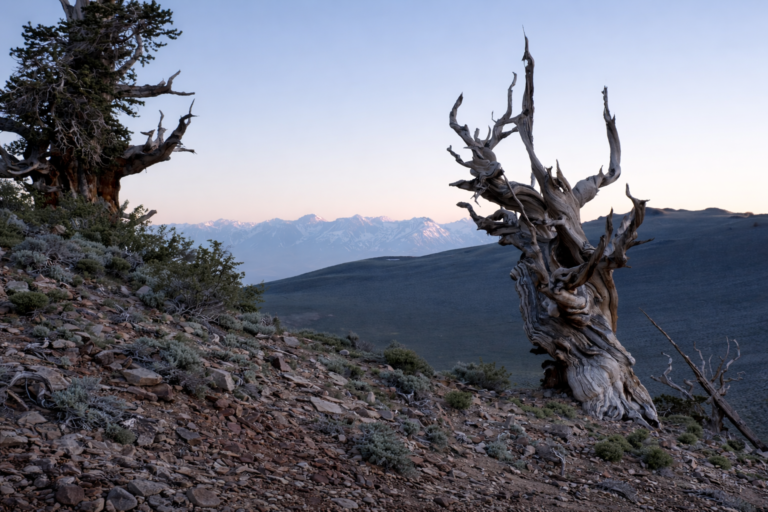
Bristlecone Pines
White Mountains
Bristlecone pines are among the oldest living organisms on Earth. Their twisted, weathered forms reflect centuries of survival in harsh conditions, standing as enduring records of time in the desert.